
Gujarat SemiConnect Conference 2026 Begins: What It Signals for Dholera Smart City

Table of Contents
- Policy Leadership at Gujarat SemiConnect 2026 Signals Strong Semiconductor Push
- India’s Semiconductor Vision Moves Toward Manufacturing Readiness
- Semicon 2.0: Focus on Ecosystem Depth
- Priority areas highlighted:
- STI Policy 2026-31 Adds Long-Term Depth
- The policy roadmap focuses on:
- Talent Pipeline Becomes a Core Strategy
- Why Dholera Is Getting Strategic Attention?
- Key factors supporting Dholera’s rise:
- Industry Participation Reflects Growing Confidence
- Connectivity Infrastructure Strengthening the Case
- The Bigger Picture for Dholera Smart City
- Frequently Asked Questions
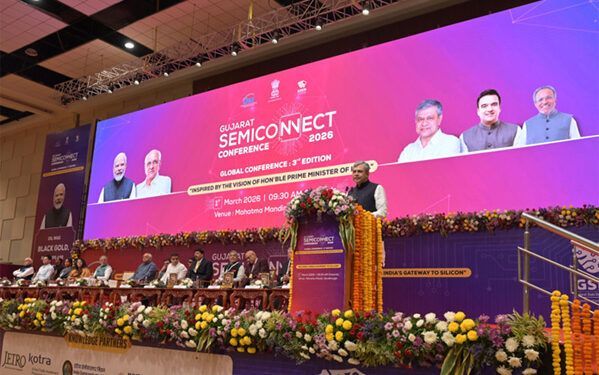
The Gujarat SemiConnect Conference 2026 has commenced at the Mahatma Mandir Convention and Exhibition Centre, drawing national and global attention to Gujarat’s rapidly evolving semiconductor ecosystem. The two-day summit has brought together policymakers, technology companies, chip manufacturers, and research leaders to accelerate India’s deep-tech ambitions.
For observers tracking long-term industrial trends, the biggest takeaway is not just policy discussion - it is the increasing operational momentum around emerging hubs like Dholera Smart City. With strong representation from government and industry, the conference reflects a broader shift from intent to ecosystem execution.
Policy Leadership at Gujarat SemiConnect 2026 Signals Strong Semiconductor Push
The inaugural session was led by Union Minister Ashwini Vaishnaw alongside Gujarat Chief Minister Bhupendra Patel, underscoring the high policy priority being given to semiconductors, electronics manufacturing, and artificial intelligence.
During the address, the Union Minister emphasized that the combined strength of AI, semiconductors, and electronics manufacturing will shape India’s next phase of exponential growth. This framing is important because it positions semiconductors not as a standalone sector but as the foundation of the future digital economy.
The messaging from the leadership strongly indicates that India’s semiconductor push is entering a more execution-oriented phase.
India’s Semiconductor Vision Moves Toward Manufacturing Readiness
One of the most significant updates shared at the conference is that India has already secured multiple semiconductor manufacturing facilities under its national program. Importantly, early-stage production activity has begun within the ecosystem, with additional facilities expected to become operational in the coming years.
This development marks a psychological and industrial shift. For years, India’s semiconductor narrative was largely policy-driven. The current phase signals movement toward tangible manufacturing capacity, ecosystem depth, and supply-chain development.
For regions like Dholera SIR, this transition is particularly relevant because semiconductor investments typically follow infrastructure readiness and long-term planning certainty.
Semicon 2.0: Focus on Ecosystem Depth
A major theme throughout Gujarat SemiConnect 2026 is the evolution toward Semicon 2.0. Unlike earlier approaches that focused primarily on fabrication plants, the new strategy emphasizes building a fully localized semiconductor ecosystem.
Priority areas highlighted:
- Development of deep-tech startups
- Localization of semiconductor equipment supply chains
- Strengthening design-to-manufacturing capabilities
- Building supporting electronics ecosystems
- Expanding global technology partnerships
This ecosystem-first approach is critical for long-term competitiveness. Countries that succeeded in semiconductors such as Japan and Taiwan built layered ecosystems rather than isolated fabs. India is now attempting a similar structural model.
STI Policy 2026-31 Adds Long-Term Depth
Another major announcement at the conference was the rollout of Gujarat’s Science, Technology & Innovation (STI) Policy 2026-31. The policy aims to strengthen the research backbone required to sustain semiconductor and deep-tech growth.
The policy roadmap focuses on:
- Accelerating indigenous research
- Supporting frontier technologies
- Expanding STEM talent pipelines
- Building statewide innovation clusters
- Strengthening intellectual property generation
A key structural initiative is the formation of Gujarat Rajya Research & Innovation Clusters (GRRIC). The first phase will focus on the Gandhinagar-Ahmedabad-Dholera corridor before expanding to other regions.
This cluster-based development model is designed to create a distributed innovation ecosystem rather than concentrating growth in a single city.
Talent Pipeline Becomes a Core Strategy
Beyond infrastructure and policy, the conference repeatedly highlighted human capital as the decisive factor in semiconductor success. The state’s roadmap aims to nurture a large pool of skilled researchers by 2030 through fellowships, STEM programs, and innovation initiatives.
The “From Silicon to Students” initiative is particularly noteworthy. It aims to align academic institutions with industry needs, ensuring that workforce supply keeps pace with manufacturing expansion.
For emerging industrial regions like Dholera Smart City, this focus on talent development is critical. Semiconductor ecosystems typically require highly specialized engineers, technicians, and researchers, and early workforce planning often determines long-term success.
Why Dholera Is Getting Strategic Attention?
Among the various industrial locations discussed at the conference, Dholera SIR received notable visibility as a future-ready semiconductor destination. The region’s positioning is based on several structural advantages that align with the needs of high-technology manufacturing.
Key factors supporting Dholera’s rise:
- Reliable power and utility framework
- Availability of large contiguous land parcels
- Integration with the Delhi Mumbai Industrial Corridor
- Long-term master-planned urban ecosystem
The Dholera activation area is already witnessing steady infrastructure development, which is gradually improving investor confidence. As semiconductor players typically prefer locations with long planning horizons, Dholera’s structured development model is gaining attention.
Industry Participation Reflects Growing Confidence
Gujarat SemiConnect 2026 has attracted participation from major domestic and global players, including Tata Electronics, Micron Technology, Kaynes Semicon, and CG Semi. Their presence signals rising industry confidence in India’s semiconductor roadmap.
International participation from Japan and Taiwan further reinforces the perception that India is becoming more integrated into the global semiconductor value chain.
For ecosystem watchers, such participation often serves as an early indicator of future supply-chain expansion, vendor development, and ancillary industry growth.
Connectivity Infrastructure Strengthening the Case
Industrial success depends heavily on logistics efficiency, and this factor was also highlighted during discussions. Projects such as the Ahmedabad-Dholera Expressway and the upcoming Dholera International Airport are expected to significantly improve regional accessibility.
These developments are likely to support:
- Faster industrial logistics
- Improved export connectivity
- Better workforce mobility
- Stronger long-term investor confidence
When combined with the Delhi Mumbai Industrial Corridor framework, the region’s connectivity profile is steadily strengthening.
The Bigger Picture for Dholera Smart City
The Gujarat SemiConnect Conference 2026 sends a clear signal that India’s semiconductor journey is entering a more mature phase. Policy alignment, ecosystem planning, talent development, and infrastructure execution are now moving in parallel.
Within this broader transformation, Dholera Smart City is emerging as a location to watch. While the ecosystem will evolve over time, the strategic signals are becoming increasingly consistent.
Key takeaways for observers:
- Semiconductor policy momentum is strengthening
- Gujarat is deepening its innovation infrastructure
- Global industry participation is rising
- Workforce planning is becoming more structured
- Dholera’s infrastructure readiness is improving
As developments continue to unfold, Dholera is gradually transitioning from a long-term vision project into a potential deep-tech manufacturing hub within India’s semiconductor landscape.
Frequently Asked Questions
Q. What is the Semiconnect Conference 2026 and its link to Dholera?
A. Semiconnect 2026 is a major semiconductor industry event highlighting India’s chip manufacturing growth, with Dholera Smart City being part of this emerging ecosystem.
Q. Why is Semiconnect 2026 important for Dholera Smart City?
A. It reflects increasing focus on semiconductor development, which supports Dholera’s positioning as a future manufacturing and technology hub.
Q. How does the semiconductor industry impact Dholera’s growth?
A. Semiconductor investments can attract supporting industries, improve infrastructure demand, and boost long-term economic activity.
Q. Is Dholera becoming a semiconductor hub in India?
A. With multiple projects, policy support, and industry focus, Dholera is gradually emerging as a planned semiconductor and electronics manufacturing destination.
Q. Can semiconductor events and investments increase real estate demand in Dholera?
A. Yes, industry growth and ecosystem development can increase interest in residential plots and planned developments over time in Dholera.